


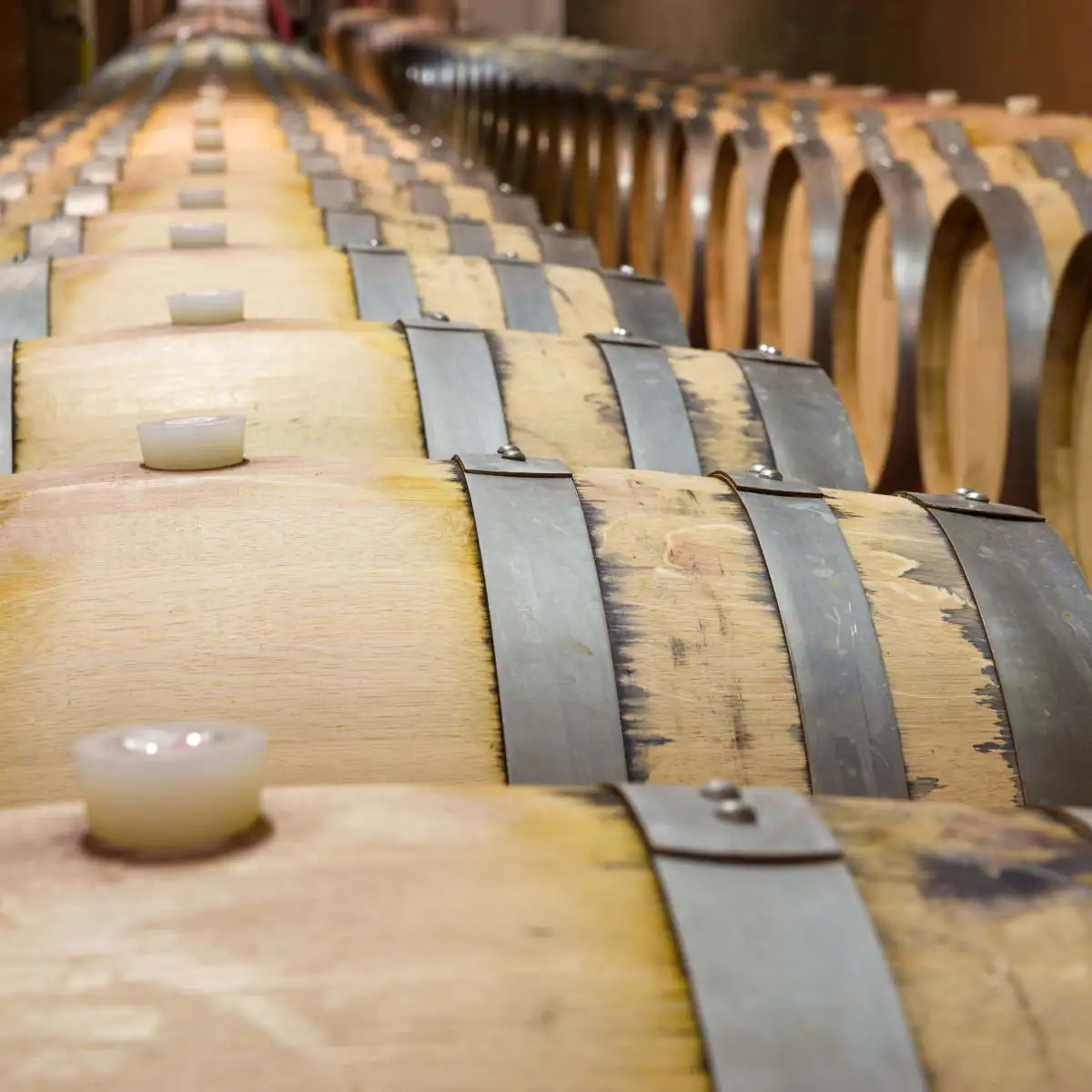
Oak barrels are made from living material — wood — and wood is constantly influenced by its surroundings. Changes in temperature and humidity cause it to absorb or release moisture, which in turn affects its shape and tightness.
In most cases, problems such as leaks, mold, or loss of functionality are not caused by defects in the barrel itself. They develop because the barrel was stored incorrectly at some point. Understanding how to store an oak barrel at different stages of use plays a key role in keeping it functional over time.
This article provides an overview of commonly accepted storage practices for oak barrels:
- before the barrel is used for the first time
- while it is actively aging a product
- when it is empty between uses
The approaches described below are based on practices widely observed in both small-scale and professional aging environments.
The Fundamental Rules Behind Proper Barrel Storage
All storage decisions for oak barrels are built around managing two opposing risks.
- Loss of moisture, which leads to shrinking staves, loose joints, and leaks
- Excess moisture, which creates favorable conditions for mold and microbial growth
Effective storage aims to keep the wood stable while preventing the internal environment from becoming biologically active. Every method discussed later is simply a different way of managing this balance.
Recommended Storage Environment
In most situations, oak barrels perform best when kept under stable environmental conditions.
- Temperature: typically around 10–15 °C (50–59 °F)
- Humidity: generally within the 65–75 % range
- Light: protected from direct sunlight
- Air movement: gentle ventilation without strong drafts
Consistency is more important. Rapid or repeated changes in temperature, humidity, or airflow tend to stress the wood and increase the risk of structural problems.
Storing a New, Unused Oak Barrel
Ideally, a new barrel is prepared and put into service shortly after it is received. When temporary storage is unavoidable, certain precautions help preserve its condition.
- The barrel is kept in its original plastic wrapping only while it remains new and completely dry
- Storage takes place in a cool, dark area with stable conditions
- Heat sources, direct sunlight, and drafts are avoided
- Packaging is left intact until preparation begins
- Dry attics, garages, and heated spaces are generally unsuitable
- Before preparation, the staves, hoops, bung hole, and tap are inspected
These steps help ensure the barrel reaches its first use without drying out or deforming.
Storage Considerations for a Filled Barrel
This section applies to barrels that are actively aging spirits or other beverages.
In general, attention is focused on maintaining stable surroundings and regular observation.
- Temperatures are kept within a moderate range
- Relative humidity is maintained at a level that supports wood stability
- The bung is fitted securely without being forced
- The barrel is checked periodically for signs of leakage or evaporation
Beverage-specific considerations
- Wine and other low-alcohol beverages (such as beer, cider, or mead) are usually topped up to minimize air exposure and oxidation
- Spirits naturally lose volume through evaporation over time and may require refilling
- Direct sunlight is avoided
- Very dry environments are discouraged, as low humidity encourages stave shrinkage
How to Handle an Empty Barrel Between Uses
Barrels are often most vulnerable when they are not in active use. Improper handling during this stage is a common cause of long-term damage.
Whenever possible, an empty barrel is refilled within 24–48 hours as part of a continuous aging cycle. When this is not practical, an alternative storage approach is usually chosen.
Plain water is not considered a storage method for an empty barrel. While water is appropriate for cleaning and preparation, it is not suitable for holding a barrel between uses. When water is present, it is typically chlorine-free and removed within 48 hours.
Without protective measures, stagnant water can quickly support microbial activity, depending on temperature and residues left in the wood.
Wet Storage Using a Preservation Solution
Wet storage with a preservation solution is widely used to keep empty barrels (not filled with beverage) stable between uses. The method maintains moisture inside the wood while limiting biological activity.
Why this approach is commonly chosen
- It helps prevent the wood from drying out
- It reduces the likelihood of mold and microbial growth
- It supports tight joints and consistent sealing
Typical approach
- The barrel is thoroughly rinsed with clean water
- Previously used barrels may be cleaned more deeply with a baking soda solution (2 tablespoons per 10 L of water), followed by thorough rinsing
- All standing water is allowed to drain completely
- A storage solution is prepared using barrel storage tablets
- commonly formulated with potassium metabisulphite and citric acid
- only certified food-grade tablets intended for barrel preservation are used
- The barrel is filled fully to eliminate air pockets
- exposed wood above the liquid level presents the highest mold risk
- The bung is inserted
- Storage takes place under stable conditions with adequate ventilation
Ongoing attention
- Periodic inspection every 1–3 months
- Replacing or topping up the solution when necessary
Alcohol-Based Storage for Spirit Barrels
This method is sometimes used for short-to-medium-term storage when a barrel is expected to continue aging spirits.
In practice, it may involve:
- Filling approximately 10–15 % of the barrel volume with alcohol (around 40–50 % ABV, alcohol by volume)
- Using only food-grade alcohol suitable for beverage production
- Sealing the barrel with a bung
- Checking the liquid level every few weeks
- Gently rotating the barrel occasionally to distribute moisture across the staves
This approach can limit microbial activity but requires regular attention. It is generally unsuitable for barrels intended for wine, beer, or other low-alcohol beverages.
Dry Storage of an Empty Oak Barrel
Dry storage reduces moisture-dependent microbial activity but introduces structural risks.
When a barrel is emptied, moisture remains within the wood. As drying occurs gradually, the internal environment passes through a sensitive phase during which mold or bacteria may develop — especially in barrels previously used for low-alcohol products.
Barrels that previously held spirits behave differently. Alcohol absorbed into the wood temporarily suppresses microbial growth, allowing such barrels to tolerate dry storage more reliably. Even so, extended dry storage shifts risk from biological issues to structural ones.
As the wood continues to dry, staves lose volume. After 1–3 months, particularly in dry or drafty spaces, rehydration is often required. In some cases, hoops may loosen or shift, and full recovery is not guaranteed.
For barrels previously used with wine or beer, dry storage combines two risks:
- microbial growth while the wood remains partially damp
- shrinkage once it becomes fully dry
For this reason, dry storage is generally discouraged for such barrels.
If a barrel must be left empty:
- It is cleaned thoroughly to remove residues
- All liquid is drained
- The barrel is not sealed while damp
- Storage occurs in a cool, dark place with gentle ventilation
- Heated rooms, sunlight, and strong drafts are avoided
- Periodic inspection checks for mold, excessive drying, or hoop movement
Summary
Dry storage is not a preservation technique but a temporary inactive state. While it may be tolerated briefly after spirits, it increases the likelihood that rehydration will be required. For barrels previously used with low-alcohol beverages, this approach is generally discouraged.
Sulfur-Based Storage in Controlled Professional Settings
(informational reference only)
In some professional environments, sulfur dioxide (SO₂) has traditionally been used to limit microbial activity during extended empty storage.
After thorough cleaning and draining, sulfur dioxide is introduced using sulfur wicks or controlled gas (SO₂) application. The barrel is then sealed and stored under cool, humid conditions, with treatments repeated as needed.
This method is mentioned for completeness only.
Important safety considerations
- Sulfur dioxide is hazardous when inhaled and requires proper ventilation
- Incorrect handling can cause chemical irritation to the user or leave persistent sulfur-related odors inside the barrel.
- Improper application may result in uneven treatment or structural drying
- This approach is not appropriate for household use or for users without specific experience
Because of these risks, sulfur-based storage is typically carried out only in controlled professional environments where trained personnel, safety protocols, and suitable facilities are in place. For most users, alternative storage methods that involve fewer risks are preferred.
Key Storage Takeaways and Practical Notes
Most barrel problems arise from avoidable storage oversights rather than from defects. When handled properly between uses, an oak barrel can remain functional and leak-free for many years.
- Do not leave plain water inside a barrel for extended periods without replacement
- Do not store barrels in dry, heated spaces
- Do not expose barrels to direct sunlight
- Do not wrap or seal damp barrels in plastic film
- Do not leave barrels unattended in long-term storage
- Clean the barrel before any storage period
- Choose a storage approach that matches the barrel’s intended use and duration of storage
- Maintain stable and appropriate temperature and humidity conditions
- Label barrels with contents and dates
- Rehydrate dry-stored barrels before reuse so the wood can reseal
- Inspect barrels regularly for cracks, leaks, or loose hoops
When stored correctly, oak barrels can remain usable for many years. Most damage develops not during active use, but during the periods between uses — making proper storage one of the most important factors in a barrel’s lifespan.