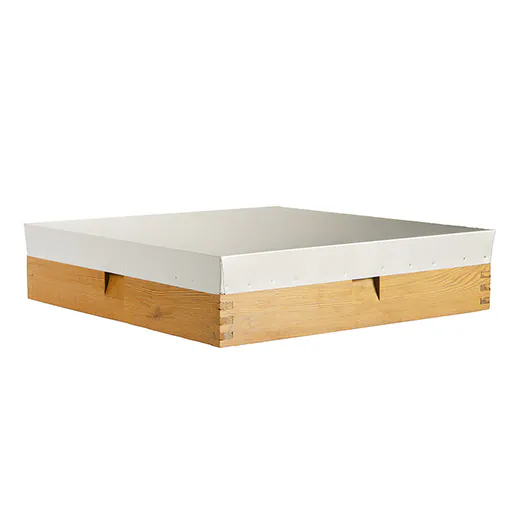


Thermally modified wooden hives feature reduced moisture absorption, more stable dimensions, and improved resistance to fungi, decay, and insects. The material shows steadier performance under typical environmental exposure, including humidity, rain, and temperature fluctuations, while maintaining a consistent internal microclimate and naturally weathering without losing functionality. All properties are achieved through an environmentally clean thermal modification process.
B.S. National Thermally Modified Wooden Hive
Thermally modified wooden hives feature reduced moisture absorption, more stable dimensions, and improved resistance to fungi, decay, and insects. The material shows steadier performance under typical environmental exposure, including humidity, rain, and temperature fluctuations, while maintaining a consistent internal microclimate and naturally weathering without losing functionality. All properties are achieved through an environmentally clean thermal modification process.
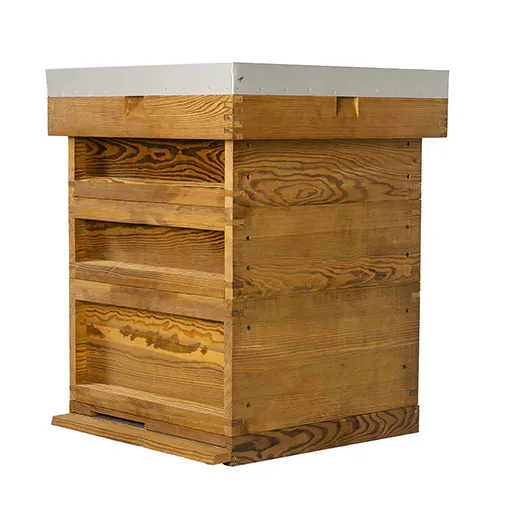
B.S. National Thermally Modified Nucleus Box (Nuc Hive)
Nucleus hives made from thermally modified wood provide a more stable working environment due to the material’s lower ability to absorb moisture, its steadier dimensions, and its naturally improved resistance to biological degradation. This helps the box retain consistent shape and function when exposed to fluctuating weather conditions.
All properties are achieved through an environmentally clean thermal modification process.
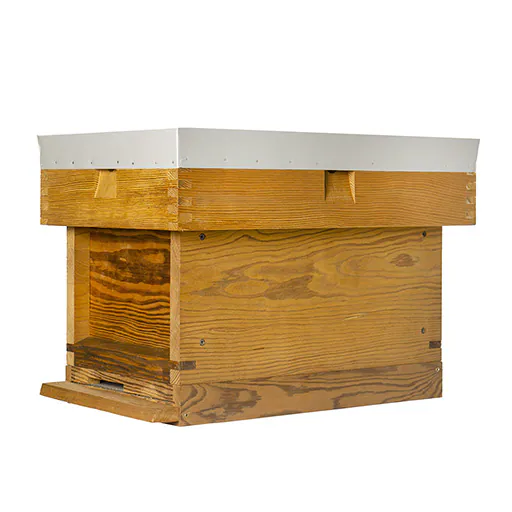
B.S. National Thermally Modified Varroa Mesh Floor
Varroa mesh floors produced from thermally modified wood offer greater dimensional stability, reduced moisture uptake, and naturally enhanced resistance to degradation. This helps the floor unit maintain its geometry and performance under routine outdoor exposure.
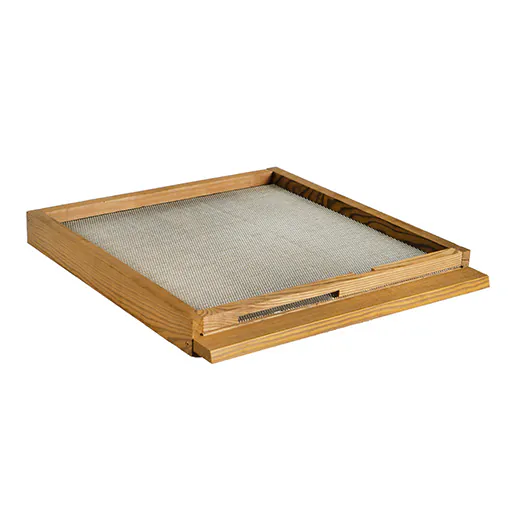
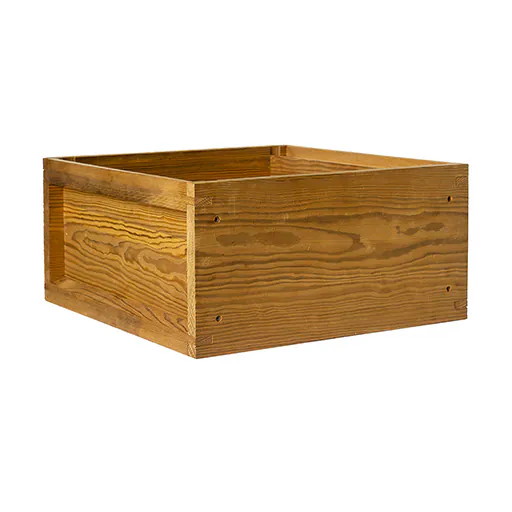
B.S. National Thermally Modified Brood & Super Boxes
Brood and super boxes made from thermally modified wood offer steadier performance in outdoor conditions thanks to the material’s reduced tendency to absorb moisture, its more stable dimensions, and its naturally increased resistance to biological wear.
All properties are achieved through an environmentally clean thermal modification process.
B.S. National Thermally Modified Hive Roof
A hive roof made from thermally modified wood offers a steadier, more weather-tolerant cover for B.S. National hives. Thanks to the altered structure of the wood, the roof takes on less moisture, stays truer to its shape, and copes better with long-term outdoor exposure.